State of the Art
Technology is a key part of the creative world. From the science behind paints and pigments, enabling vivid masterpieces to be displayed for years without fading, to the sensors inside modern cameras, capturing megapixels of data to share with friends and followers.Many of us have seen computers evolve from a simple hobby to an always-on handheld device, connecting us wherever we are via messaging apps and social media. Over the years we've developed a keen interest in all new technologies, especially Artificial Intelligence.
We first featured AI-assisted art in our article AI Nouveau. Toby Davis used AI as the basis for his beautiful hand-painted artwork, inspired by turn-of-the-century Parisian designs.
Since then, AI has changed. It now costs billions, steals artists' work with widespread plagiarism, decimates entire creative industries and has sparked massive environmental concerns.
In this rare joint interview, we speak to fine artist Nicola Currie (previously featured in our article Seeing The Light) and professional photographer / online gallery owner Jason Wickens, to discuss their lives and what they think about this new technology.
Nicola Currie
Nicola is a fine art oil painter. She specialises in floral and still life paintings and paintings created over gold leaf. Her home studio is in the market town of Ledbury where she is surrounded by the beautiful Herefordshire countryside. In her self-described "Eden" she is constantly inspired by the flowers, fruits and foods around her.
Which is more important, realism or interpretation?
I work in a classical realist style most of the time exploring the beauty and form of the flora in front of me. Painting allows me to spend many hours with a single flower, observing how its colours shift as the light changes and distilling those observations into one image. Rather than recording a single moment, a painting can hold many moments at once.
“Painting allows me to spend many hours with a single flower ... a painting can hold many moments at once.”
I began focusing on floral painting after the pandemic years during a three-year residency at Spetchley Park Gardens near Worcester. Here I was able to observe and enjoy the changing seasons and took delight in celebrating the beauty of the flowers on canvases. Since moving to Ledbury, the Ledbury Flower Farm provides an abundance of source material.
I would describe myself as realist but not a photo realist. Rather than reproducing exactly what I see, I use colour, texture and composition to communicate my experience of the flower and the emotions it evokes.
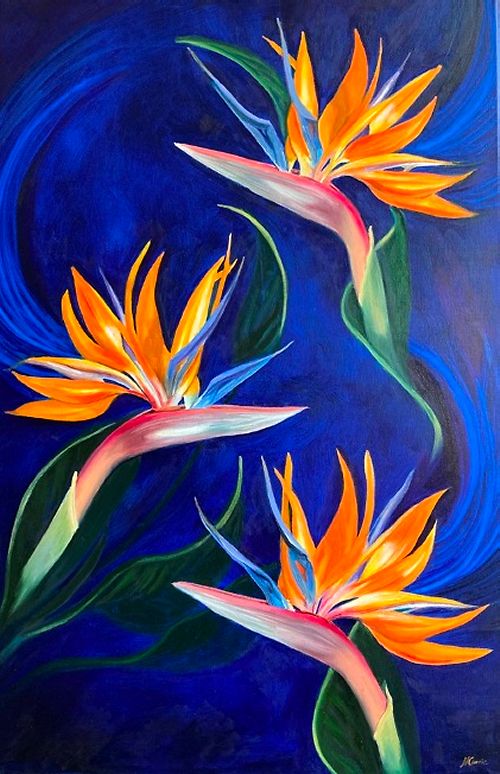
An example of this is in my large painting Paso Paradiso. Here the heads of Bird-of-Paradise flowers reminded me of an energetic dance. To recreate this in paint I used the colour opposites of blue and orange in a lively and textured approach to paint to evoke the sense of movement and dance in the background.
In my painting Tulipa Tarantella I worked to capture the constantly changing forms of tulips opening. Because the flowers changed from hour to hour, the painting became a synthesis of many observations rather than one frozen moment. The sense of movement is emphasised by drawing into the surface of the paint in a sgriffito style.
“I use colour, texture and composition to communicate my experience of the flower and the emotions it evokes.”
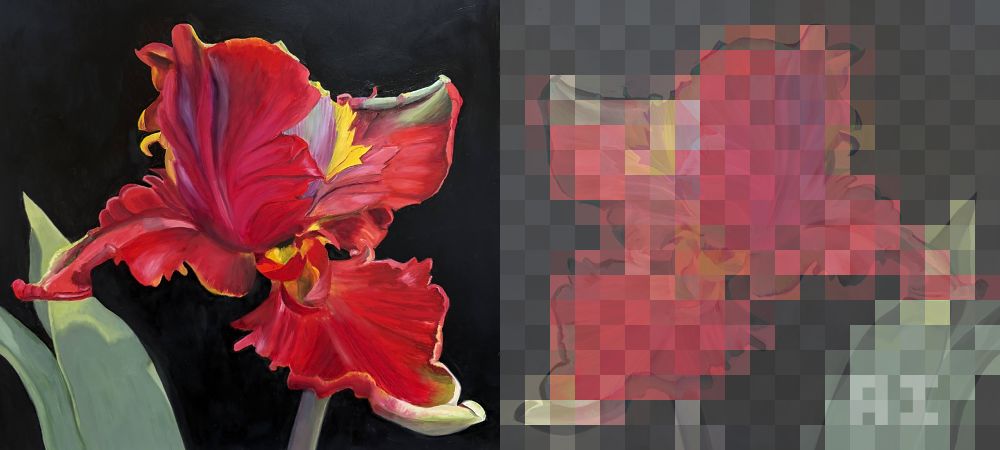
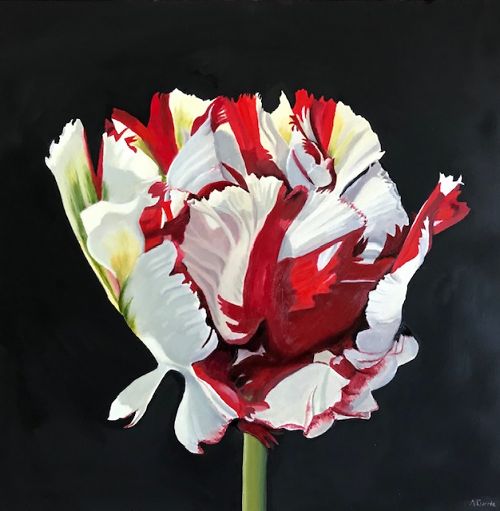
Even in my more realistic paintings of tulips - Tulipa Estella Rijnveld (below) and Rainbow Parrot Tulip (header image and top gallery) there is an element of abstraction through separating the flower from its setting and focusing on some details but leaving out others.
How does colour influence your work?
Colour is always the starting point for my work. Flowers constantly reveal unexpected colour relationships that inspire new paintings. Technically I paint on fine gesso boards or fine linen canvases using high quality artists’ colours. An original oil painting may take a number of studies before committing it to a canvas or board. Some paintings take weeks to complete.
My floral paintings often combine opaque and transparent colours to create depth and luminosity. For example in Bearded Purple Iris on Gold the variety of opaque and transparent purples and magentas on the velvety apron of the flower helped to create a dramatic contrast to the gold leaf. In the flower’s centre thin transparent colour glazes of paint create a luminosity. The reflective gold surface changes with the light, making the painting subtly different throughout the day.
Is your work available to buy?
Most of my original paintings are available to buy from my website. In addition, I sell through art fairs, galleries and Open Studios. I also produce a number of limited edition signed giclée prints from my paintings. Commissions for floral paintings of flowers have been popular in my practice, where a collector wants to mark a special anniversary or event or have a painting to fit into their décor.
“AI can imitate visual styles, but it cannot replace the curiosity, observation and emotional connection...”
What do you think of AI?
This is a tricky question. On the one hand I have benefitted from using AI for the more routine administrative tasks and for technical support. On the other hand I am very concerned about the long-term consequences of copyright and the potential for misuse of artist ownership of their work. Without a doubt AI will change the art world and already has. AI can imitate visual styles, but it cannot replace the curiosity, observation and emotional connection that come from spending time with real flowers and translating that experience into paint.
Jason Wickens
Jason lives in a quiet Worcestershire village between Pershore and Evesham. Since 2006, he and his wife have run Fotoviva Art Prints, a family-run online gallery that works with a select team of professional photographers. They make their photographs available as wall art for homeowners, interior designers and businesses.
He also works as a graphic and web designer, and has been taking photographs since his father gave him an old SLR camera when he was about 12. His own photography is mainly nature-based, with a particular interest in landscapes, flowers and close-up macro photography.
Which is more important, realism or interpretation?
For me, realism and interpretation do not have to be opposites. A photograph can remain faithful to the original subject while still reflecting the photographer’s individual style.
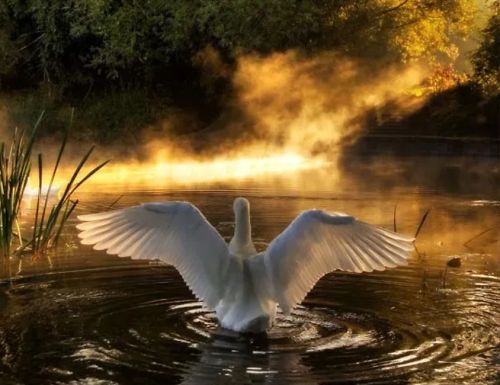
When photography is intended to be displayed as wall art, I think the creative side becomes especially important. Technical ability matters, of course, but people are often drawn to an image because of its atmosphere, composition or distinctive use of light rather than simply because it is technically perfect. A subtly stylised photograph can sometimes work particularly well as a piece of art.
Most photographers use post-processing software such as Photoshop or Lightroom. This might involve adjusting contrast, colour balance, exposure or cropping the composition. Cameras do not always reproduce a scene in quite the same way that our eyes experienced it, so editing can help the final photograph reflect what the photographer saw and intended.
“...people are often drawn to an image because of its atmosphere, composition or distinctive use of light...”
I am not against filters or more creative editing when they suit the image. Photography has always involved interpretation, from the choice of lens and exposure through to darkroom techniques and modern digital processing. For me, the important thing is that the finished work still has a meaningful connection to the original photograph.
How does colour influence your work?
When I am outside with my camera, I tend to think about the image as a whole rather than concentrating on colour alone. I am looking at the composition, light, subject and focus, but also at the atmosphere of the scene and what made me want to photograph it in the first place.
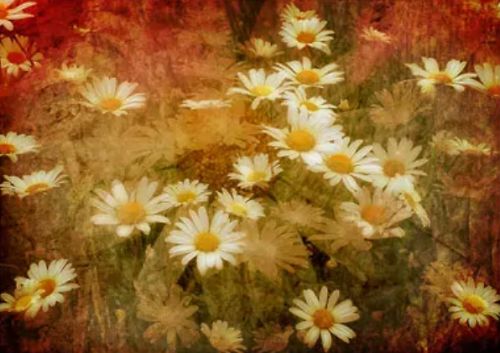
However, colour becomes important when someone is choosing artwork for an existing interior. A customer may love a photograph in isolation, but it also needs to sit comfortably within the room where it will be displayed. That does not necessarily mean matching every colour exactly. Artwork can complement the existing palette, introduce a useful accent colour or provide a deliberate contrast.
That is why we created the ‘Discover art by colour’ section on Fotoviva. It allows customers and interior designers to browse curated collections built around a dominant colour or palette. Someone might be looking for a golden floral print, a purple sunset, a blue coastal scene or a woodland photograph filled with green. Browsing in this way makes it easier to find artwork that works with the colours already present in a room.
Is your work available to buy?
Fotoviva was originally created to sell my own photography, but it has since developed into an online gallery representing a team of professional photographers. Each photographer has an individual portfolio page, and they receive a share from every sale of their work.
Visitors can browse by subject, including landscape photography, coastal seascapes, floral art, wildlife photography and black-and-white prints. They can also search according to the room they are decorating, with collections for living rooms, bedrooms, hallways, dining rooms and offices. Each photograph is made to order and is available as a framed art print, canvas print or contemporary acrylic print, depending on the image and format.
What do you think of AI?
AI-generated imagery is improving extremely quickly. At the moment, there are often small details that reveal how an image was made, but those clues are becoming much harder to spot.
It may soon be possible to create an entirely artificial photograph that is almost indistinguishable from one captured with a camera. That raises difficult questions about authenticity, copyright and the value placed on the photographer’s skill and experience.
“...photographs sold by Fotoviva are not AI-generated and have not had AI-created elements added...”
We make a point of stating that the photographs sold by Fotoviva are not AI-generated and have not had AI-created elements added to them. On our website, we identify the photographer and, where possible, explain the location, subject or story behind the image. The decisions involved in making a photograph - choosing the viewpoint, waiting for the right light and recognising a fleeting moment - are part of the work itself.
AI imagery may be visually impressive, but it does not have that same relationship with a real place, subject or experience. I think many people are beginning to value that distinction, particularly as artificial content becomes more widespread.
Many thanks to Nicola and to Jason for answering our questions. You can see more of Nicola Currie's artwork on Instagram and you can see Jason Wicken's photos on Fotoviva.